

A good outfit can still feel unfinished. Add the right jewelry, and the whole look changes. Traditional Indian jewelry styling is about more than piling on gold. It is about choosing pieces that fit the outfit, the event, and the person wearing them. This guide covers how festive and wedding looks come together, one ornament at a time.
Indian Festive Jewelry Traditions
Indian festive jewelry traditions vary by region and by occasion. During Diwali, many families wear gold, since the festival is linked with prosperity. For Navratri, women often choose oxidized silver pieces that match colorful garba outfits. Eid brings out pearls and delicate gold sets in many homes.
Festivals also set the mood for jewelry. Daytime events call for lighter pieces. Evening celebrations can handle bolder ones.
Families often bring out heirlooms at these times. A grandmother’s necklace or a mother’s bangles may only appear once a year. That habit gives each piece a story.
Traditional Indian Head Ornaments
Traditional Indian head ornaments sit at the top of the look. They frame the face and draw attention upward. Because of that, they work best when the rest of the outfit supports them.
The most common is the tikka, which rests at the center of the forehead. A maang tikka hangs from a chain pinned into the hair parting. A small drop suits a festival outfit. A larger one, set with stones or pearls, suits a wedding.
Other head ornaments include the matha patti, which follows the hairline, and the sheeshphool, a dome worn on the crown. In Maharashtra, brides wear strings of pearls called mundavalya across the forehead. Each one fits a different hairstyle and face shape.
A simple rule helps here. Keep the hair neat if the headpiece is large. A bun or a smooth braid gives it room.
Ethnic Jewelry Styling Ideas
Ethnic jewelry styling ideas start with the neckline. A high neck or a collar needs little or no necklace. A deep neckline can hold a long chain or a layered set. A sari with a wide border pairs well with a slim necklace, since the fabric already has detail.
Color is the next step. Gold works with almost every shade, especially deep reds, greens, and blues. Silver and oxidized pieces look sharp with white, indigo, and earthy tones. Pearls work well with pastels.
Then think about balance. Pick one piece to lead. If the earrings are large, keep the necklace light. If the necklace is the star, choose small studs. Two strong pieces fight for attention, and the look becomes busy.
Statement Jewelry Pieces
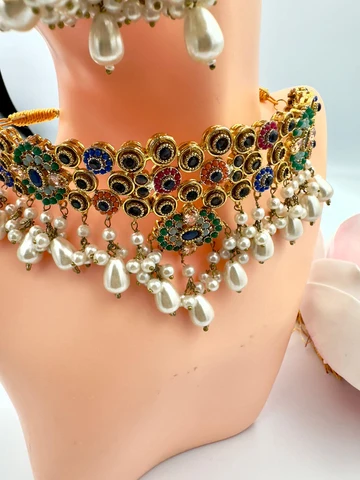
Statement jewelry pieces are the ones people notice first. A wide choker, a bold chandbali, or a heavy cuff can each carry a full outfit. Use only one or two of them at a time.
Statement earrings are a good place to start. A pair of jhumka earrings in a large size can lift a plain kurta or a simple saree. The dome shape and swinging drop add movement, so the look feels alive without extra layers.
Weight matters as much as size. Heavy earrings can tire the ears after a few hours. Many come with a small support chain that links to the hair. Try the pair on for a few minutes before a big event.
Indian Wedding Accessories
Indian wedding accessories cover far more than necklaces. A bride may wear a nose ring, armlets, a waist belt, bangles, toe rings, and a hand ornament called a haath phool. Guests have their own needs, since wedding events run for days, and each one has a different dress code.
For guests, the goal is to look festive without competing with the bride. Choose rich pieces, but skip the heaviest sets. Let the bride have that spot.
Practical items matter too. Bring spare earring backs and a small pouch for pieces you take off. Pin chains carefully so they do not tug on your hair. Small details like these keep you steady through a long day.
Traditional Jewelry Combinations
Traditional jewelry combinations follow patterns that families have used for generations. A necklace, earrings, and headpiece in the same design make a classic trio. Bangles in a matching color finish it. These groups are easy to wear because everything speaks the same language.
Mixing is also fine when done with care. Repeat one feature across pieces. A shared stone color, such as green or red, can tie a gold necklace to silver earrings. A common motif, such as a peacock or a flower, works the same way.
Metals need thought. Gold with gold looks smooth. Gold with oxidized silver can look striking if the pieces share a shape or pattern. Avoid mixing three different finishes at once.
Putting It Together
A simple plan keeps the process easy. Start with the outfit and its main color. Pick the hero piece. Add supporting pieces in smaller sizes. Check the result in a mirror from a few steps away.
Then remove one item. Most people wear a little too much. The last piece you added is often the one to take off.
Comfort also counts, so test movement. Raise your arms, turn your head, and sit down. If a piece catches or pulls, change it before the event, not during it.
The Takeaway
Traditional Indian jewelry styling works best when each piece has a clear job. Head ornaments frame the face, earrings add motion, and necklaces fill the neckline. Wedding accessories add the final layer of detail.
Choose one star, keep the metals consistent, and let the outfit guide the rest. The result looks full and calm, and it carries the meaning these ornaments have held for centuries.
